In the digital age, businesses succeed when technology aligns perfectly with client expectations. Yet, many projects fail because there’s a gap between what clients want and what tech teams deliver. Bridging this gap is key to ensuring better results, higher satisfaction, and long-term partnerships.
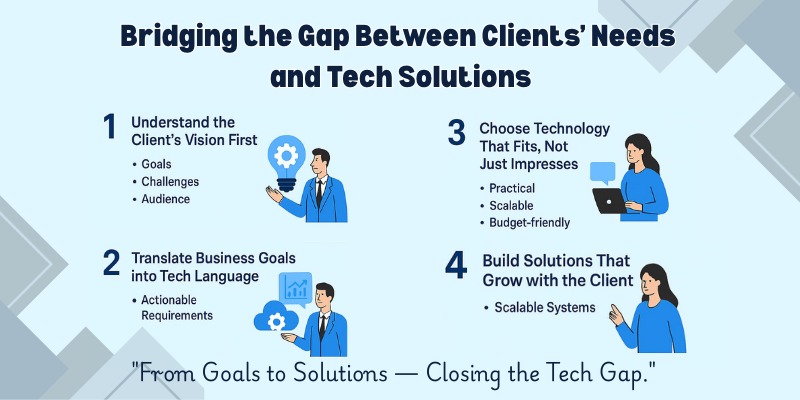
1. Understand the Client’s Vision First
The foundation of any successful tech project is understanding the client’s goals, challenges, and audience. This requires asking the right questions, identifying pain points, and focusing on outcomes rather than just features.
2. Translate Business Goals into Tech Language
Clients think in terms of results (“increase sales,” “reduce costs”), while tech teams think in systems and code. A clear translation process ensures everyone is on the same page and avoids costly miscommunication.
3. Choose Technology That Fits, Not Just Impresses
The right tech stack should be practical, scalable, and budget-friendly. Choosing tools that solve problems instead of chasing trends ensures better ROI and smoother implementation.
4. Keep Communication Open and Simple
Regular updates, progress demos, and easy-to-understand reports keep clients involved. Using project management tools like Jira, Trello, or Asana helps track progress and maintain clarity.
5. Build Solutions That Grow with the Client
Tech solutions should evolve with business needs. Offering flexible, future-ready systems and ongoing support shows commitment to the client’s long-term success.
Final Note:
Bridging the gap between client needs and tech solutions isn’t just a technical task — it’s about listening, communicating, and delivering real value. When clients and tech teams work in sync, innovation becomes impactful.
FAQs :
1. Why does a gap exist between clients and tech teams?
Different focus — clients think business goals, tech teams think technical details.
2. How to understand a client’s vision?
Ask targeted questions, identify pain points, clarify goals.
3. Why is communication important?
Keeps both sides aligned and prevents misunderstandings.
4. Why choose the right tech stack?
Ensures scalability, cost efficiency, and smooth integration.
5. How can solutions grow with clients?
Build flexible systems and offer ongoing support.