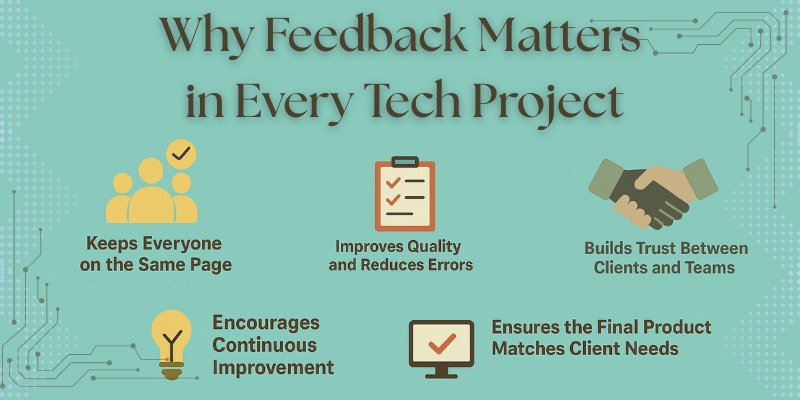
Feedback is one of the most powerful tools for improving tech projects. Without it, teams risk delivering solutions that don’t meet client needs or user expectations. Regular feedback ensures alignment, faster improvements, and long-term project success.
1. Keeps Everyone on the Same Page
Feedback helps confirm that the project is moving in the right direction. Regular check-ins prevent misunderstandings and ensure that both clients and developers share the same vision.
2. Improves Quality and Reduces Errors
When issues are spotted early through feedback, they can be fixed before becoming bigger problems. This leads to higher quality outcomes and reduces costly rework later.
3. Builds Trust Between Clients and Teams
Clients feel valued when their opinions are heard. This builds stronger relationships, increases satisfaction, and creates trust that lasts beyond a single project.
4. Encourages Continuous Improvement
Feedback isn’t just about fixing problems — it’s about learning. Teams can use feedback to improve processes, adopt new ideas, and deliver better results in future projects.
5. Ensures the Final Product Matches Client Needs
The ultimate goal of feedback is to ensure the final product truly reflects what the client wants. Without it, even well-built solutions can miss the mark.
Conclusion:
Feedback isn’t just an extra step in tech projects — it’s the backbone of success. By collecting, analyzing, and acting on feedback, teams can deliver solutions that meet client needs, improve quality, and build stronger partnerships.
Short FAQs
1. Why is feedback important in tech projects?
It ensures alignment, improves quality, and reduces errors.
2. How does feedback help clients?
It makes them feel heard, valued, and part of the process.
3. When should feedback be taken?
At every stage of the project — from planning to delivery.
4. Does feedback slow down projects?
No, it actually saves time by preventing rework later.
5. What’s the main benefit of feedback?
Delivering solutions that match client needs and expectations.